Skip to content
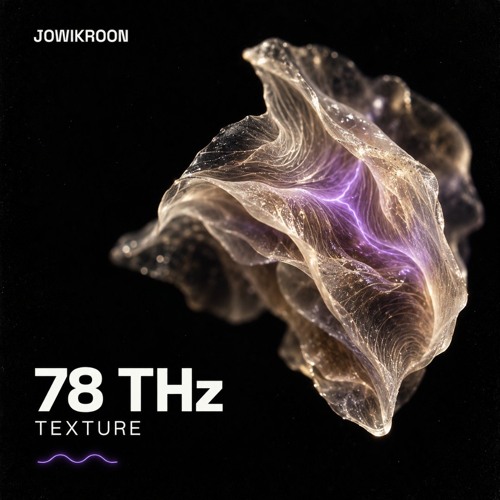
    Cover artwork for 78 THz Texture by Jowikroon
    Electronic · Instrumental studySoundCloud recording

    78 THz Texture

    By Jowikroon, the artist alias of Hans van Leeuwen

    UploadedOct 11, 2026
    Length2:38
    AvailabilityPublic on SoundCloud
    AsJowikroon

    An instrumental electronic texture study outside the current NEON album narrative. The frequency in the title is a creative image, not a technical measurement of this recording.

    The date above is the public SoundCloud upload date, not necessarily the composition, mastering or official release date.

    Listen

    Play this SoundCloud recording above or open its source page. Instrument and lyric details appear only when verified.

    Inside the recording

    Texture, under the surface.

    An original stereo source and a saved enhancement sit together in the session. Their readings show a small change in overall level and a different peak boundary.

    1. Preserve the source

      The original stereo file is saved at 48 kHz and 16-bit. Its measurements form the first reference in this session.

    2. Revisit the texture

      The saved enhancement names the original source as its input. Its restoration uses mid/side processing across the whole track, and the result is stored at 48 kHz and 24-bit.

    3. Look at the difference

      The enhancement reads 0.2 LU louder overall, with a true peak 0.9 dB higher. Its loudness range changes from 5.9 to 6.0 LU. These differences invite a listening comparison.

    Measured versions

    The recording, in numbers.

    These are named versions from the studio session. The player above carries the public recording; a match between that stream and these studio files has not been established.

    Overall loudness

    LUFS

    The measured average across the full recording. Values closer to zero are louder.

    Readings for the named versions.

    True peak

    dBTP

    The estimated highest reconstructed peak. Zero marks digital full scale.

    Blue marker: 0 dBTP, digital full scale.

    Loudness range

    LU

    How widely the recording’s loudness varies over time.

    Readings for the named versions.

    Peak-to-loudness distance

    dB

    True peak minus overall loudness. This is different from short-window crest and loudness range.

    Calculated from the two measured values.

    Compare two versions.

    Choose a reference and another saved version. Each difference is the compared version minus the reference, calculated from the displayed readings.

    Enhancement · version 1 compared with Original source

    Overall loudness
    +0.2 LU
    True peak
    +0.9 dB
    Loudness range
    +0.1 LU
    Peak-to-loudness distance
    +0.7 dB

    Positive means a higher reading; negative means a lower reading. Peak distance is true peak minus overall loudness. These differences describe the named versions, without rating their sound.

    Saved processing settings

    Each entry names the input and settings recorded for that saved version. Separate entries may belong to different branches of the session.

    • Enhancement · version 1

      Audio restoration

      Source version
      Original source
      Saved
      • Stereo processing: mid/side
      • Selected range: whole track
    Versions & measurement notes
    Measured readings and calculated peak distance for each version
    VersionLUFSTrue peakRangePeak distanceFile format
    Original source Neural Analog Studio · 4 November 2026−15.0−2.9 dBTP5.9 LU12.1 dB48 kHz · 16-bit · Stereo
    Enhancement · version 1 Neural Analog Studio · 4 November 2026−14.8−2.0 dBTP6.0 LU12.8 dB48 kHz · 24-bit · Stereo

    The studio readings were checked in Neural Analog on 4–5 November 2026, after the selected version finished loading. The table records the check date for each version. They are the service’s displayed measurements; no new processing was started for this page.

    LUFS measures overall loudness. True peak estimates the highest reconstructed peak. Loudness range describes variation across the recording. These measures describe different things and do not rate musical quality.

    A value above 0 dBTP indicates a reconstructed peak above digital full scale. It is a reason to check the export and playback path, not proof that every listener hears distortion.

    Other public recordings